
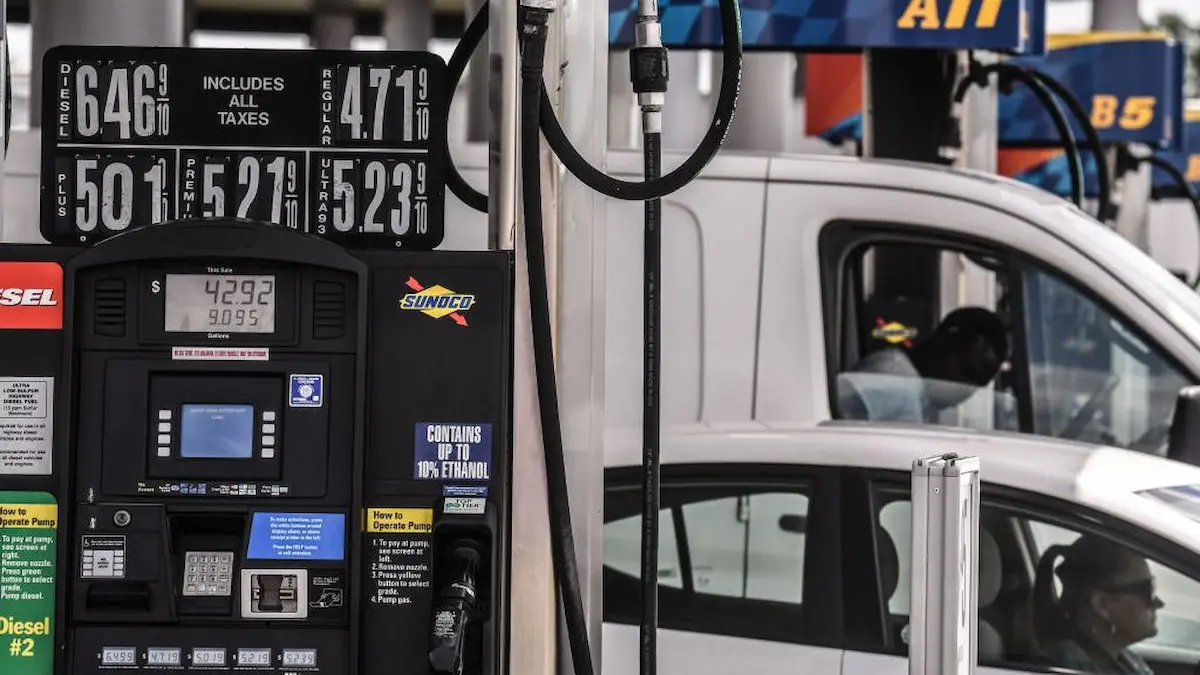
Gasoline prices in the United States could rise again during the summer of 2026, according to several energy market analysts. While prices remained relatively stable during the winter months, seasonal demand, global oil supply factors, and refinery production levels may push fuel costs higher in the coming months.
For many American households, gasoline is one of the most visible everyday expenses. Even small increases at the pump can affect commuting costs, travel budgets, and overall household spending. According to data from the U.S. Energy Information Administration, gasoline prices in the United States tend to rise during the summer as driving activity increases.
Energy analysts say the combination of higher seasonal demand and global market uncertainty could lead to noticeable price changes before the end of the summer.
The short answer
Several factors could push gas prices higher in 2026:
• Increased summer travel demand
• Higher crude oil prices on global markets
• Refinery maintenance and limited fuel supply
• Geopolitical tensions affecting oil production
• Hurricane risks in the Gulf Coast refining region
These factors often combine during the summer months, which is historically the most expensive time of year for gasoline.
Cause 1: Summer Driving Demand
One of the most predictable drivers of higher gasoline prices is increased travel during the summer.
Millions of Americans take road trips, travel for vacations, and commute more frequently during warmer months. This seasonal surge in driving leads to greater demand for gasoline nationwide.
According to travel projections from AAA, summer is consistently the busiest season for road travel in the United States. When fuel demand rises quickly, prices often follow.
Fuel producers must supply large volumes of gasoline to meet this demand, and even small disruptions can push prices upward.
Cause 2: Changes in Crude Oil Prices
Crude oil is the primary raw material used to produce gasoline, so global oil prices have a direct impact on fuel costs.
When oil prices rise in international markets, gasoline prices usually increase soon after. Oil prices can change due to global supply conditions, economic activity, or geopolitical tensions.
According to market analysis from the International Energy Agency, shifts in global oil production and demand remain one of the biggest factors affecting fuel prices worldwide.
Even modest increases in crude oil prices can translate into higher costs at gas stations.
Cause 3: Refinery Maintenance
Refineries convert crude oil into gasoline and other fuel products. During the spring and early summer, many refineries temporarily reduce production for maintenance or upgrades.
When refinery output drops, gasoline supply can tighten. This can create short-term price increases, particularly in regions with limited refining capacity.
The U.S. Energy Information Administration reports that refinery maintenance cycles are one reason gasoline prices often begin rising in late spring.
If maintenance overlaps with strong demand, price increases can become more noticeable.
Cause 4: Global Supply Uncertainty
Global oil supply can also affect gasoline prices in the United States. Production decisions by oil-exporting countries can influence the overall supply of crude oil in global markets.
Organizations such as OPEC periodically adjust production levels in response to economic conditions. When oil production is reduced, prices may rise due to tighter supply.
Political tensions or disruptions in major oil-producing regions can also create uncertainty in energy markets, leading to price volatility.
Cause 5: Hurricane Season Risks
Another potential factor in summer fuel prices is the Atlantic hurricane season.
Many of the United States’ largest oil refineries are located along the Gulf Coast. Severe storms can temporarily shut down refinery operations, reducing fuel production and distribution.
According to hurricane preparedness information from the National Oceanic and Atmospheric Administration, strong storms in the Gulf region have historically caused short-term spikes in gasoline prices.
Even the threat of hurricanes can lead to price increases if markets anticipate supply disruptions.
What NOT to Expect
While gasoline prices may rise during the summer, some common assumptions about fuel costs are often misleading.
❌ Expecting gas prices to remain stable year-round
Fuel prices often follow seasonal patterns, with summer typically bringing higher prices.
❌ Assuming local prices depend only on nearby supply
Gasoline prices are influenced by global oil markets as well as domestic production.
❌ Expecting immediate price drops after oil prices fall
Changes in crude oil prices often take time to appear at gas stations.
What Drivers Can Do
Although fuel prices are largely determined by market conditions, drivers can still take steps to reduce their gasoline spending.
Simple strategies include combining trips to reduce driving distance, maintaining proper tire pressure for better fuel efficiency, and comparing gas prices at different stations.
Using navigation apps that track local fuel prices can also help drivers find cheaper stations in their area.
The Bottom Line
Gasoline prices in the United States often rise during the summer due to increased travel demand, refinery maintenance, and fluctuations in global oil markets.
According to projections from the U.S. Energy Information Administration, these seasonal factors remain key drivers of fuel prices each year.
While price changes are difficult to predict precisely, analysts say drivers should expect some upward pressure on gasoline prices as the summer travel season approaches.