
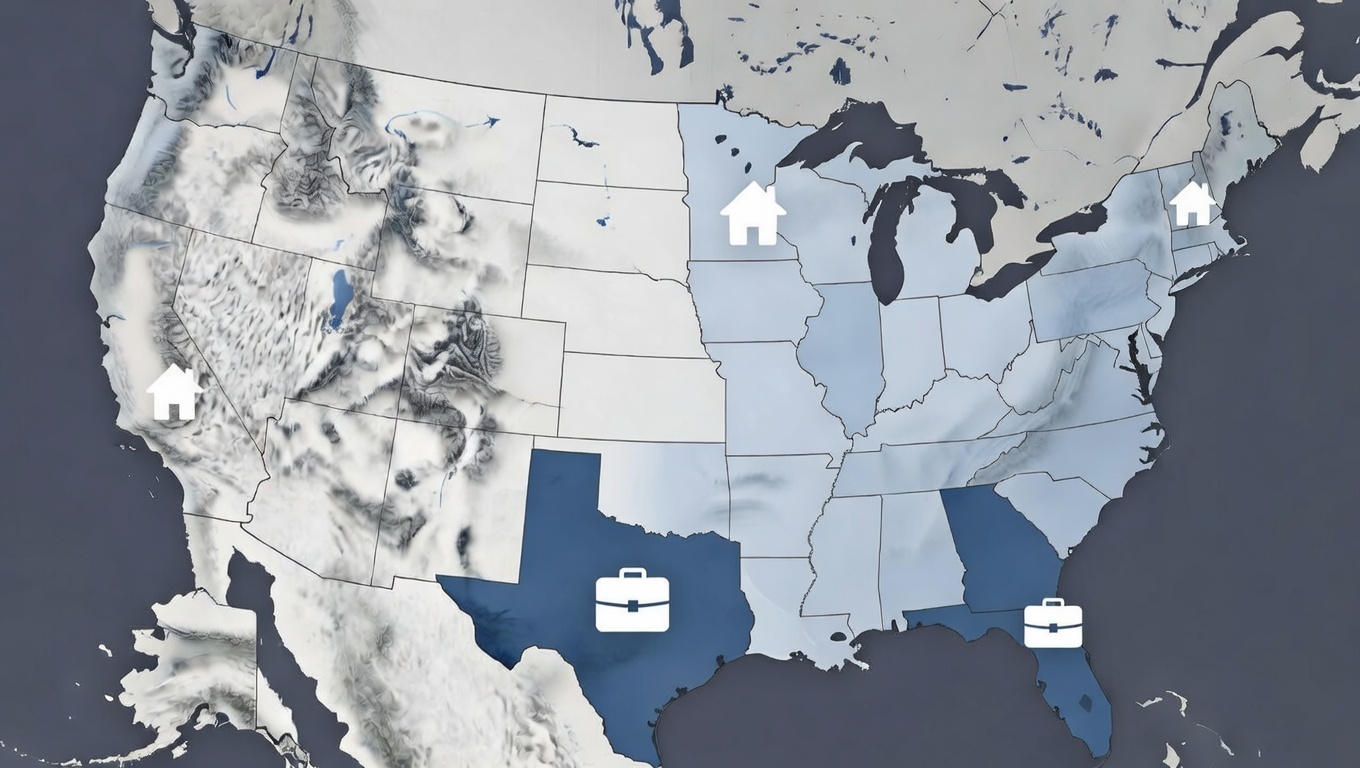
America is on the move — and the destination is increasingly the South and West. New data from the U.S. Census Bureau shows that between 2020 and 2025, the country added more than 10 million people — but nearly three-quarters of that growth landed in just one region: the South. Meanwhile, New York lost over 200,000 residents and California shed another 170,000. This isn’t a demographic footnote. It’s a full-scale reshaping of American life, politics, and the economy.
The Top 5 Fastest-Growing States Right Now
The latest Census estimates rank these states as the fastest-growing from July 2024 to July 2025:
- South Carolina — fastest-growing state at 1.5%, adding nearly 80,000 residents in a single year
- Idaho — up 10.4% since 2020, more than triple the national average
- North Carolina — consistent growth fueled by tech jobs and an affordable cost of living
- Texas — added more than 391,000 residents in one year alone, the largest raw gain in the country
- Utah — growing mainly through natural change, with one of the highest birth rates in the nation
In percentage terms since 2020, Idaho leads the pack at 10.4%, followed by Florida at 8.9% and Texas at 8.8% — all far above the national average of 3.1%.
Texas: The Undisputed Growth Giant
No state tells the story of American migration better than Texas. Since 2020, it gained 2.56 million residents — more than any other state. Cities like Austin and Dallas have transformed into major national hubs, drawing corporations, remote workers, and families alike.
The pull factors are straightforward: no state income tax, a booming job market in tech, logistics, and healthcare, and housing costs that still undercut coastal cities by a wide margin. Texas received more than 550,000 new residents from other states in 2024 alone. By 2050, its population is projected to grow by another 8.6 million — a 27% increase from today.
Why People Are Actually Leaving — And Where They’re Going
The flipside of the Sun Belt boom is a quiet crisis in the Northeast and parts of the West. According to Visual Capitalist’s analysis of Census data, New York lost 201,269 residents between 2020 and 2025 — the largest population drop of any state. Illinois shed over 102,000. California’s population fell by more than 170,000 over the same period, despite being the most populous state in the country.
The reasons aren’t complicated. As of late 2025, the median home price hit $818,000 in California and $501,000 in New York — both well above the national median of $446,000. Combined with high state income taxes and rising costs of living, millions of Americans have simply done the math and moved.
The Rise of the “Affordable South”
South Carolina’s surge to the top of the growth rankings didn’t happen by accident. The state offers warm weather, no estate tax, relatively low property taxes, and a cost of living well below the national average. It’s attracting retirees from the Northeast, remote workers from California, and young families priced out of Charlotte and Atlanta.
Idaho tells a similar story. Boise has emerged as one of the most desirable mid-size cities in America — balancing outdoor recreation, genuine affordability, and a growing tech scene. Though growth has slowed slightly from its pandemic peak, Idaho still expanded at more than triple the national rate between 2020 and 2025.
Utah stands apart from the pack for a different reason entirely. Unlike most fast-growing states where migration drives the numbers, Utah’s growth is largely homegrown — the state has one of the highest birth rates in the nation, fueled partly by its large Mormon population, which averages 3.4 children per household compared to the national average of 2.1.
What This Shift Means for the Rest of the Country
Population growth isn’t just a demographic curiosity — it drives congressional seats, federal funding, and economic investment. Fast-growing states attract new businesses and infrastructure dollars. Shrinking states face labor shortages, declining tax bases, and political influence that slowly erodes with every Census.
The South and West are projected to dominate U.S. population growth through 2050, with Texas and Florida alone expected to account for nearly 30% of total national growth by 2030. The Midwest saw positive domestic migration for the first time this decade in 2025 — a small but notable sign that the map may be shifting again.
One thing is clear: Americans are voting with their feet — for lower taxes, warmer weather, and a shot at actually affording a home.