
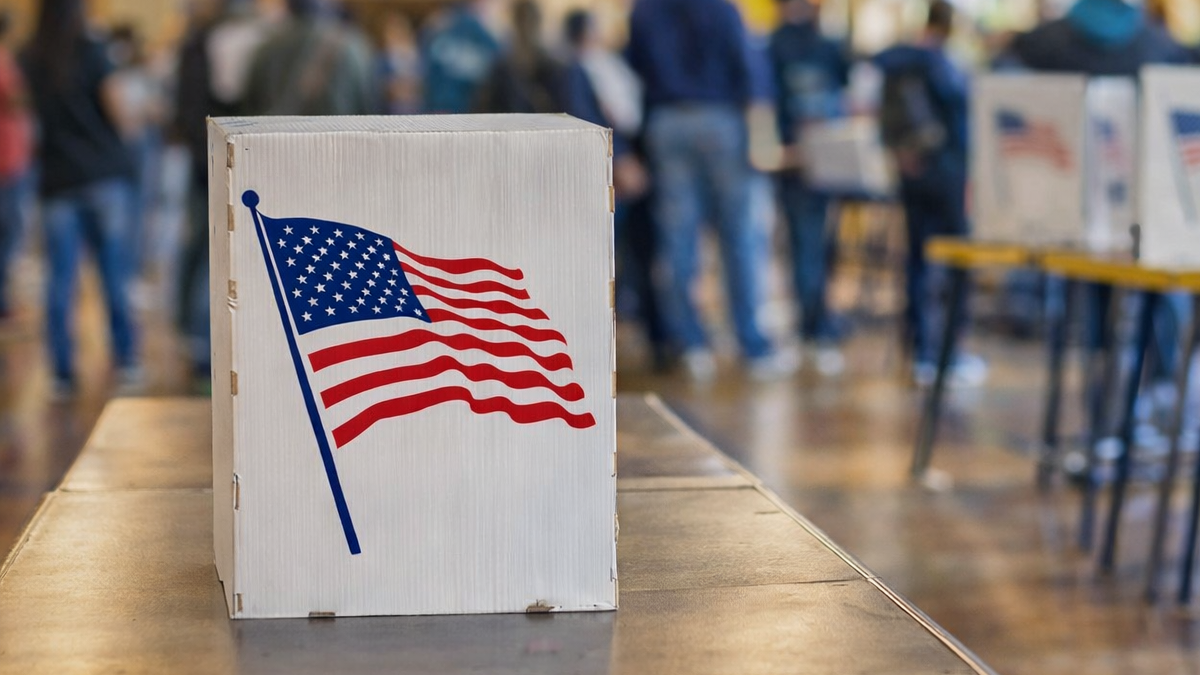
Every election season, millions of Americans squeeze a trip to the polling place between school drop-offs, work shifts, and evening commutes — all on a Tuesday. No other major democracy does this. Most of Europe votes on weekends. So why does the United States stubbornly stick to a Tuesday in November? The answer goes back nearly 200 years, to a world of horse-drawn buggies and farmers hauling produce to market — and it’s stranger than you might expect.
It All Started With a Problem in 1845
Before 1845, there was no single national Election Day. States were allowed to hold elections any time they pleased within a 34-day window before the first Wednesday in December. That created a serious flaw: states that voted early could influence the outcome in states that voted later, once early results spread by word of mouth and telegraph. Congress decided to fix it by picking one uniform day for the entire country.
The question was: which day?
Why Tuesday — and Not Any Other Day
In the 1800s, most citizens worked as farmers and lived far from their polling place. Since people often traveled at least a day to vote, lawmakers needed to allow a two-day window. That logic immediately knocked out several days.
Sunday was sacred — most Americans attended church and considered it a day of rest. Wednesday was market day, when farmers brought their goods into town to sell. Monday didn’t work either, because traveling on a Sunday violated the spirit of the Sabbath for most Christian households.
The solution was elegant in its simplicity: voters would rest on Sunday, travel to their polling place on Monday, and cast their ballot on Tuesday — arriving back in time to sell their goods at Wednesday’s market.
Tuesday won by process of elimination.
Why November — and Why Not the First Day of the Month?
The choice of November was equally practical. Spring and summer were planting season. September and October were harvest time. December brought frozen roads and brutal weather. November — after harvest, before winter — was the obvious choice.
But why the first Tuesday after the first Monday? That oddly specific phrasing was deliberate. Lawmakers wanted to prevent Election Day from falling on November 1, when merchants typically did their bookkeeping for the previous month. A distracted merchant class might not show up to vote — or worse, might be influenced by the economic mood of the moment. So Congress built in the buffer: never November 1, always the Tuesday that follows the first Monday.
The Rule That Outlived Its Reason
The 1845 law made perfect sense for 1845. Less than 2% of Americans work in agriculture today. Roads are paved. Cars exist. The horse-and-buggy commute to the county seat concerns no one.
And yet the law stands — unchanged — nearly 180 years later.
According to NPR, the United States ranks among the worst developed democracies in voter turnout, and political scientists repeatedly identify Tuesday voting as a major factor. Polls open mostly during business hours. Employers in many states aren’t legally required to give workers time off. For hourly workers, a Tuesday trip to the polls means lost wages.
Thomas De Luca, professor of political science at Fordham University, put it plainly: “It keeps voter turnout down and makes it harder for those least likely to vote to vote.”
So Why Hasn’t It Changed?
Many have tried. The Weekend Voting Act has been introduced in Congress multiple times, proposing to move elections to Saturday and Sunday. Others have pushed to make Election Day a federal holiday. A bipartisan group called Why Tuesday? — founded by former UN Ambassador Andrew Young — has campaigned for reform for two decades.
Twelve states and Washington D.C. now recognize Election Day as a public holiday. Twenty-eight states require employers to give workers paid time off to vote. Early voting and mail-in ballots have quietly made Tuesday less of a barrier for millions of Americans. But the core law? Still 1845.
The World Does It Differently
In the 2024 European Parliament elections, 25 out of 27 EU nations voted on a Saturday or Sunday. The UK votes on Thursdays. Australia makes voting compulsory and holds it on Saturdays. The United States remains a stubborn outlier — running elections on a day chosen for farmers who have been gone for over a century.
Next time you rush to the polls on a Tuesday evening, remember: you’re honoring the schedule of a 19th-century horse and buggy.
📩 If you noticed an error or have a tip, please contact us via our Contact page.